Feeds:
Posts
Comments

Posts Tagged ‘High Plains Environmental Center’

 For nearly half a century I have been walking in the woods. Since I was five years old, long before the days of computer games and “stranger danger,” I wandered fields and forests all alone. When I came home covered head to toe in mud I simply stripped down at the door and no questions were asked about my solo journeys into the wilds of my neighborhood. For the decade that spanned my teens I walked by Towner’s Pond not far from Thoreau’s Walden. 

Thoreau understood walking in its purest form. No world traveler himself, Thoreau claimed “I have traveled quite extensively, in Concord.” But it was not so much “where” he was walking but “how” that made the difference. In the final essay of his life, Walking, Thoreau reveals the secret of his life of wandering…I am alarmed when it happens that I have walked a mile into the woods bodily, without getting there in spirit. In my afternoon walk I would fain forget all my morning occupations and my obligations to society. But it sometimes happens that I cannot easily shake off the village. The thought of some work will run in my head and I am not where my body is – I am out of my senses. In my walks I would fain return to my senses. What business have I in the woods, if I am thinking of something out of the woods? I suspect myself, and cannot help a shudder when I find myself so implicated even in what are called good works.              

If Thoreau’s simple, mid-nineteenth century life, lit by kerosene lamps, traveled on foot, communicated in face to face conversation or meticulously hand-written notes, left his mind reeling then woe to us of the 21st century! Our lightning speed communication, internet, facebook, twitter, wifi, TV and radio provides us with more information than we can process.  Surely the wild animal in each of our hearts is ready to run from this madness, at any moment, to take refuge in the wild. The cure for modern life, more than ever, is nature, where we can breathe freely and for a quiet hour rest our minds simple wonder.  I begin most days with a walk at daybreak, more often than not grinning like an idiot at something as simple as a familiar birds note and often (on a good day) end by staring at the sky like a child who has lost themselves at play. 

Those of us who live in Colorado are lucky to have access to open spaces like Rocky Mountain National Park and the 2 or 3 times a year that I get up there are great, but where do we experience nature every day? Where do children interact with the wild if they can’t connect with it in their neighborhood? I feel fortunate that my work frequently leads me outdoors and although I live in the city I can walk from my home and quickly reach the river and woods.     

My local forest has deer and mink, foxes and many birds. Last year a mountain lion and a bear were spotted nearby. On the occasions when I see a bald eagle flying along the river I ask myself “is that eagle in the wilderness?” From the eagles perspective fish in this river are no different than fish from the remotest mountain stream and the eagle is no more “civilized” by this environment than any other. Then I wonder about myself, when I walk in this urban forest am I wild, as I was as a child when a small wood lot was like Christopher Robin’s hundred acre wood?

Perhaps wildness is a state of mind that leaves enough room to recognize other beings as free and unfettered, a state where plants, animals and weather, appear as messages from a world shrouded in mystery whose patterns can only be perceived through the senses and intuited by the heart . 

In Wildness is the preservation of the World. Every tree sends its fibers forth in search of the Wild. The cities import it at any price. Men plow and sail for it. From the forest and wilderness come the tonics and barks which brace mankind. . . .   Thoreau
Read Full Post »

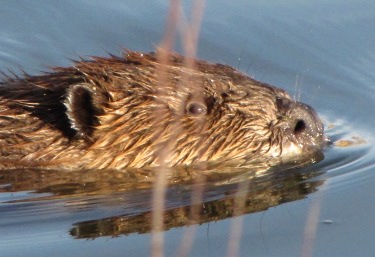
I work at the High Plains Environmental Center in Loveland, Colorado but I live in neighboring Fort Collins, by banks of the Cache la Poudre River. In both of these two places I manage (thankfully) to spend a lot of time walking outdoors. Near my home beavers took up residence this winter in a pond that was previously a gravel mine. At first I saw only the gnawed trees, evidence of the beavers presence but lately the beavers themselves have been quite visible.   

The Lewis and Clark expedition did not go through Colorado but it did cross a similar, short grass prairie landscape to the north. They believed this area to be entirely uninhabitable. On May 27, 1805 a letter from the expedition described the region as follows “these mountains appear to be a desert part of the country…barron broken rich soil but too much of a desert to be inhabited, or cultivated….We have now got into a country which presents little to our view, but scenes of barrenness and desolation; and see no encouraging prospects that it will terminate.” This area is also the “Sterile desert” we lately entered”.

The first White Men to remain in the West for any length of time were traders and fur trappers in search of beaver pelts. In the growing cities of the East, as well as Europe a gentleman wasn’t properly dressed unless he wore a top hat made of shaved beaver fur. Since the 15th century vast sums of money were accumulated all on the pelts of this semi-aquatic mammal.  Many of these early trapper were of French origin and seemed to be less interesting in “winning the West than we were in winning the heart s of the Indian maidens that they met here. In fact, many of these men became part of the tribes, interpreters for those who came later. They left their names, Baptise, Janis on modern day Indian reservations.,

Exploring my local beaver habitat I found more damaged trees in amongst a clump of red-twid dogwood (cornus stolenifera).

Red Osier Dogwood, or Red Willow as it is often called, is considered sacred to many Indian tribes as referenced in the Longfellow poem The Song of Hiawatha…


Filled the pipe with bark of willow,
With the bark of the red willow;
Breathed upon the neighboring forest,
Made its great boughs chafe together,
Till in flame they burst and kindled;
And erect upon the mountains,
Gitche Manito, the mighty,
Smoked the calumet, the Peace-Pipe,
As a signal to the nations.

The Lakota people historically inhabited the region from the Colorado Rockies, east to the Missouri river and north into Canada. Since times too ancient to remember the Lakota watched the sky in early spring as the constellation Aries moved closer and closer to the sun until it could no longer be seen. To the Lakota Aries and Triangulum represented Cansasa (chan-sha-sha) red willow, the bark of which is used in a ceremonial smoking mixture. When the sun lit the red willow it represented a pipe ceremony in the heavens.

The beaver is a “keystone” species, a species that plays a critical role in shaping the environment on which many other species depend and over hunting them radically changed Western eco-systems. Beavers are capable of taking down large trees which they use to build their dams and lodges.

By damming rivers and streams the beaver creates its own environment, ponds that allow the beaver to escape from predators, as well as providing habitat opportunities for numerous other species.

However, the destruction of trees has also made the beaver very unpopular with land owner and managers and has often become a reason for destroying or relocating the beavers.

The Indians participated in trapping and trading of beaver pelts but also appreciated the beaver’s inherent value. Native people refer to the “medicine” of each animal, unique attributes, verging on the supernatural, that can be obtained and emulated by human beings.

According to author, Jamie Sam’s in The Sacred Path Cards:

“Beaver is the doer in the animal kingdom. Beaver medicine is akin to water and earth energy and incorporates a strong sense of family and home. If you were to look at the dams that block woodland streams, you would find several entrances and exits. In building its home, Beaver always leaves itself many alternative escape routes. This practice is a lesson to all of us not to paint ourselves into corners. If we eliminate our alternatives, we dam the flow of experience in our lives.”

 National Geographic offers the following information about beavers…

Beavers are famously busy, and they turn their talents to re-engineering the landscape as few other animals can. When sites are available, beavers burrow in the banks of rivers and lakes. But they also transform less suitable habitats by building dams. Felling and gnawing trees with their strong teeth and powerful jaws, they create massive log, branch, and mud structures to block streams and turn fields and forests into the large ponds that beavers love.

Dome-like beaver homes, called lodges, are also constructed of branches and mud. They are often strategically located in the middle of ponds and can only be reached by underwater entrances. These dwellings are home to extended families of monogamous parents, young kits, and the yearlings born the previous spring.

Beavers are among the largest of rodents. They are herbivores and prefer to eat leaves, bark, twigs, roots, and aquatic plants.

These large rodents move with an ungainly waddle on land but are graceful in the water, where they use their large, webbed rear feet like swimming fins, and their paddle-shaped tails like rudders. These attributes allow beavers to swim at speeds of up to five miles (eight kilometers) an hour. They can remain underwater for 15 minutes without surfacing, and have a set of transparent eyelids that function much like goggles. Their fur is naturally oily and waterproof.

 http://animals.nationalgeographic.com/animals/mammals/beaver/

Read Full Post »

 In honor of the 10th anniversary of the founding of the High Plains Environmental Center (of which I am director) I am launching this blog. The entries that will follow in this Suburbitat series will be a Suburban Naturalist’s Journal, exploring ways of attuning our senses to the natural world, rediscovering our relationship with plants and animals that share suburbitat, developing environmental ethics and re-visioning our culture, all from the point of view of the suburban householder.

The High Plains Environmental Center, was founded by a developer, Tom Hoyt of McStain Neighborhoods. The center is comprised of 100 acres of open space, surrounding two lakes. The center also leases the surface rights of the lakes, 175 acres of open water, which is reserved for migratory waterfowl. We also manage another 135 acres of open space belonging to other landowners in Centerra, a 3500 acre mixed use development in Loveland, CO.

The project from its conception was intended to be a symbiotic relationship between a developer, an environmental center and a vital business and residential community. The first executive director of HPEC, Ripley Heinz, coined the term “Suburbitat” by combining the words suburban and habitat. The term refers to the relationship between the built and the natural in the suburban environments where we live, work and play. The concept of suburbitat also points to the possibilities for planning and building environments that restore and conserve our native biodiversity.

HPEC is funded by a percentage of permit fees collected by the city of Loveland for building within Centerra. HPEC in turn maintains trails and open spaces that are a source of pride for the community, as well as a tangible example of the commitment to environmental stewardship and corporate social responsibility on the part of McWhinney, the developer. Most importantly, this concept breaks the traditional stalemate between developers and environmentalists and facilites a constructive dialog about land use between various stakeholders.

Like many conservation areas, HPEC is constantly trying to strike a balance between recreation, conservation and education. We don’t want to put a chain link fence around the lakes with a sign that says “This is Nature – Keep Out!” People need to spend time in nature in order to be healthy and whole. Studies have shown that spending time in nature has immediate, measurable impact on our physical and emotional health. 

It is also essential to allow children to have access to nature. Since Richard Louve’s, Last Child in the Woods, which links what the author calls nature deficit disorder with ADD/ADHD, parents and educators have focused on the necessity of allowing children unstructured time in nature, as well as the need to promote eco-literacy.     

As one who is eager to pass my own life-long love of nature on to younger people, this is all extremely good news. If children don’t know that nature is out there they are not going to miss it when it disappears. After all, you don’t become an advocate for something that you never knew existed. We must begin training the land stewards of the next generation now. 

On the other hand jogging, boating, pets off leash and other impacts from human activities put a lot of pressure on wildlife and many wildlife populations are already near the breaking point. Bird populations in Colorado, similar to those in other states across the country, have crashed in the last forty years, many bird species declining by sixty percent or more.

Obviously we need to do all we can for birds and other wildlife populations if they are to survive the next forty years. We need to create a culture where conserving nature is a deeply held value and maintaining wildlife is considered an important goal. We need to learn about the wildlife species around us in order to understand what they need to thrive. Then we need to actively design a world that has benefit for wildlife built into it and like so many other things we need to do it right away.

Fortunately this project is going to be a lot of fun and it’s going to make us healthier, livelier and more aware human beings. Sustainability is about much more than the things that we build, what we drive or what we eat, it is a transformational journey that we  are making toward personal and planetary wholeness. Exploring the world around us and attuning ourselves to the rhythms of nature is part of that process.

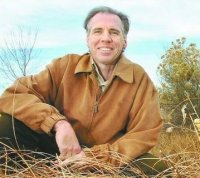
Jim Tolstrup is the Executive Director of the High Plains Environmental Center in Loveland, CO.  HPEC works with developers, businesses and homeowners to promote the restoration and conservation of Colorado’s native biodiversity in the suburban environments where we live, work and play. http://www.suburbitat.org 

Read Full Post »

« Newer Posts